ĚÇĐÄÍřŇł°ć

16 March 2026

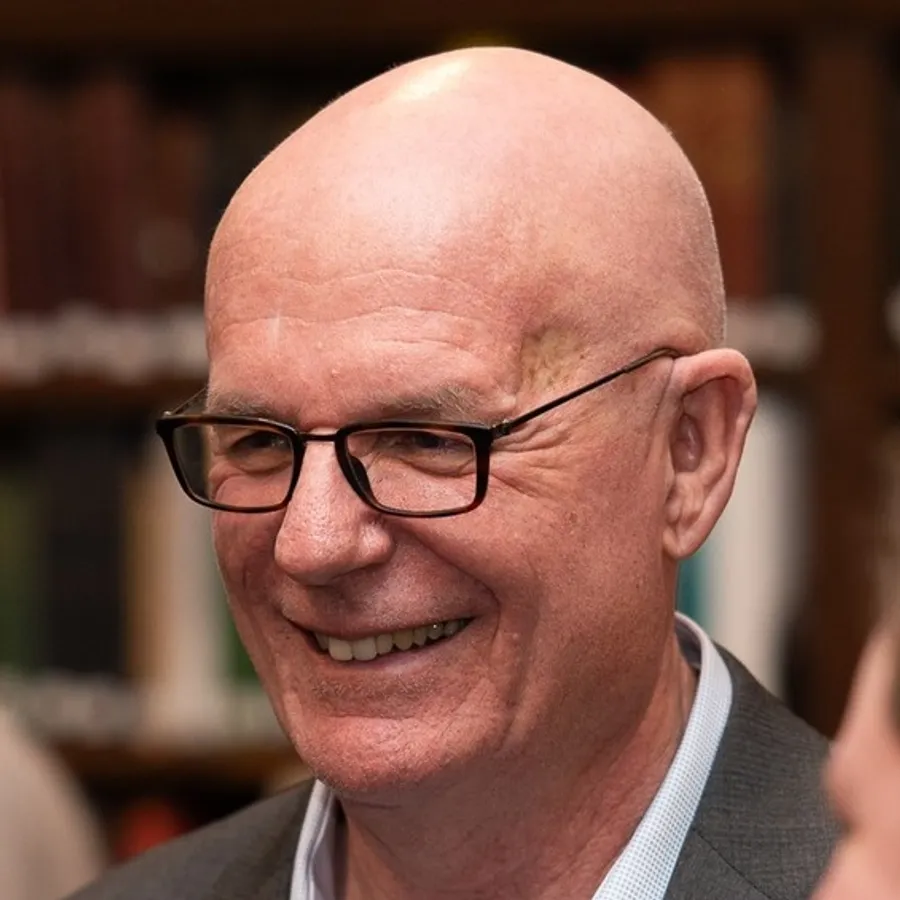
David Livingstone Smith is a professor of philosophy, he focuses on dehumanisation, race and genocide. He regards the guest professorship in the name of Tage Danielsson as a great honour and a respite from a strained academic climate in the US.

“This means a lot to me. First, it is a great honor to be invited, and to have my work given this recognition. Second, it will be wonderful to have the time and opportunity to immerse myself in research and writing. I am hoping to write a new book on the psychology of fascism, so the timing is perfect. Third, as I'm sure you are aware, the political situation in the United States is increasingly ominous. The universities here are under a lot of pressure from the Trump regime. Some have been eliminating academic programs that the regime does not approve of, for fear of being punished. Often, when I give public lectures on dehumanization, I am asked to censor my slides — to omit any reference to Trump. So, it means a lot to me to be an academic refugee, if only for a year.”

En man med glasögon som ler mot kameran. Andrew Lund Photography
When he got the email with the news that Prof. Smith was invited to be guest professor at Linköping University, he was very excited.

It felt incredible!

Shortly afterwards, that excitement was tempered by some concern about the practical preparations ahead.

“My spouse, the philosopher Subrena Smith, who will be joining me on this adventure, calmed me down. She has always wanted to spend time in Sweden, so she was excited too!”

For the past two decades, Prof. Smith’s work has focused on dehumanization, particularly in relation to race and genocide. He speaks widely in both academic and non-academic settings, and his work has been extensively featured in national and international media.

”I'm looking forward to getting to getting a taste of Swedish culture, getting to know new colleagues, working with graduate students, being part of a distinguished university, and much, much more!”

About David Livingstone Smith

Prof. of philosophy at the University of New England, Maine

David Livingstone Smith speaks widely in both academic and non-academic settings, and his work has been extensively featured in national and international media.

He has appeared in several television documentaries and is frequently interviewed for newspapers, magazines, podcasts, and radio.

In 2012, he was a guest at the G20 economic summit, where he spoke on dehumanization and mass violence.

In 2024, he gave a talk and participated in a panel discussion at IKOS together with Subrena Smith, Ola Larsmo and Stefan Jonsson.

Has authored three books on the subject

Less Than Human: Why We Demean, Enslave, and Exterminate Others (St. Martin's Press, 2011). Won the 2012 Anisfield-Wolf Award for Nonfiction.

On Inhumanity: Dehumanization and How to Resist It, (Oxford University Press, 2020).

Making Monsters: The Uncanny Power of Dehumanization, (Harvard University Press in 2021). Won the Joseph B. Gittler Award for philosophy of the social sciences and was shortlisted for the Nayef Al-Rodhan Prize in Transdisciplinary Philosophy.

Latest news from LiU

A couple of people sitting at a desk in front of a computer.

How childhood liver tumor cells acquire different features

Researchers have discovered how the so called Wnt signaling pathway can result in tumor cells with different features within a single tumor. Their findings contribute to better classification of these tumors.

En närbild av en man som bär glasögon.

David Engblom wins award for his research on how our brains make us feel ill

David Engblom, Professor of Neurobiology, is awarded the 2026 Onkel Adam Prize for outstanding research at the Faculty of Medicine. He researches the role of the brain in making us feel ill in various medical conditions.

Woman at office.

Biogenic carbon dioxide could become a key resource as biogas expands

During the production and upgrading of biogas, carbon dioxide is released, a greenhouse gas that affects the climate. However, research at ĚÇĐÄÍřŇł°ć shows that this carbon dioxide has several uses and could become an important resource.