
Everything pointed to a career as an economist. But one day Jeanne Cilliers knocked on the door of her professor’s office at Stellenbosch University, outside Cape Town, South Africa. She had decided to follow her own curiosity. It would eventually take her to Sweden.
 Anna Nilsen
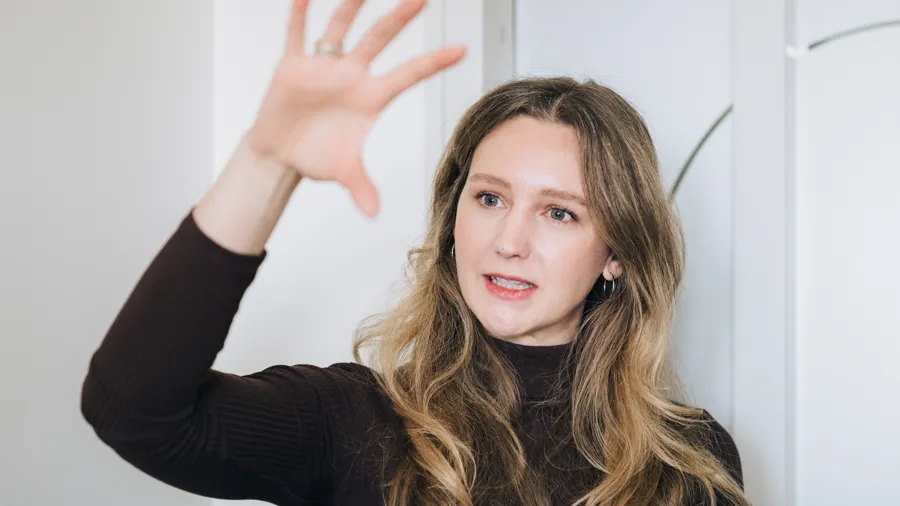
When we meet Jeanne Cilliers at the Division of Economics at Linköping University, she has recently moved here after nine years as a researcher in Lund.
Donation
“Campus Valla is very lively. It’s great to see so many students. In Lund, the economics departments are located outside campus, so this feels new and inspiring to me.”
The professorship in economic history is funded by Catharina Högbom’s and Michael Cocozza’s foundation for research and culture in Linköping municipality. The founder Michael Cocozza and his wife Catharina Högbom have donated a total of SEK 225 million to the foundation and, among other things, enabled the establishment of eight new professorships within the Faculty of Arts and Sciences at Linköping University.
Jeanne Colliers’ mission is to build her research area here in Linköping.
How do you feel about this?
“It’s a huge thing, and a challenge, but I’m ready. I’m now the only economics historian in the division, and will introduce the subject to Bachelor’s, Master’s and PhD-level students.”
Why is economic history relevant today?
“Because almost everything we experience today has historical parallels. Having the knowledge, we don’t have to start from scratch. Instead, we learn what worked and what didn’t work before.”
What are you working on right now?
“I’m planning courses in global economic history and comparative economic development. I’ll begin with a PhD course next spring and continue my research at the same time.”
The professor on whose door she knocked in Stellenbosch showed her a newspaper clip about genealogy records that had recently been published in South Africa. He suggested that these could become the basis for a thesis on demography and family history.
Swedish parish register data
“I studied economics and aimed for a career in consulting or similar. But I decided to go with what sounded interesting, rather than what would most likely lead to a job. And I still work with researchers in Stellenbosch.”
 Anna Nilsen
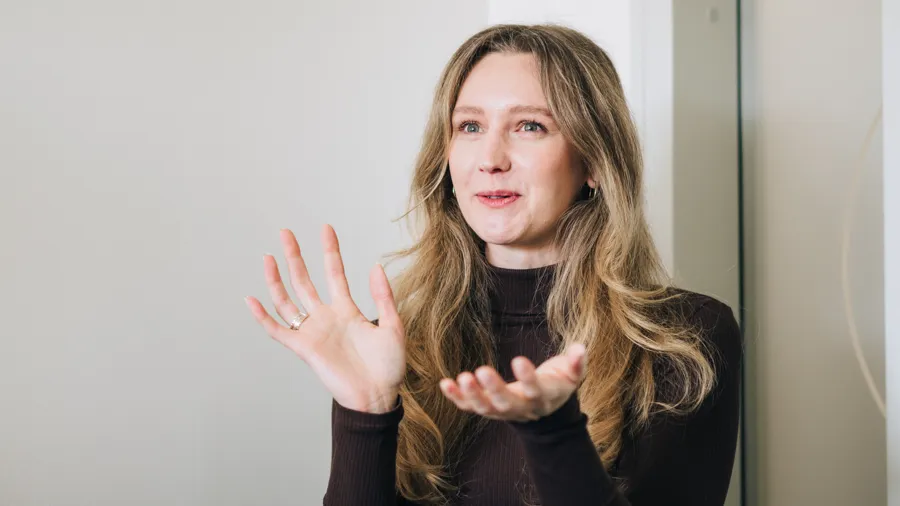
Jeanne Cilliers grew up in Stellenbosch and completed her university education, including doctoral studies, there. During her doctoral studies, she came to Sweden to participate in a summer course on Swedish parish register data. She later returned to Lund University as a postdoc, and has conducted research and taught there since 2016.
“What influenced the settlers’ decision about how many children they wanted? And why did the demographic transition occur so early among settlers in southern Africa? I wanted to understand demographic processes such as marriage, fertility and mortality.”
Demographic transition is a model that describes how birth rates and death rates change over time in line with economic and social development. Jeanne Cilliers has worked with theories about women’s education, access to contraception, decision-making power in relationships, cultural notions of family size and economic factors such as crop failure and the need for child labour in agriculture.
Interesting challenge
“You might not think that people planned their families that actively 150 years ago, but they did. Population wise, we see how fertility fell rapidly, which makes it exciting to compare historical colonial environments with today’s societies.”
People wonder whether this is the right time to have children.
It was the same 150 years ago
She notes that Sweden is currently facing an interesting challenge in terms of low birth rates, around 1.4 children per woman. This can be seen as a form of second demographic transition.
 Anna Nilsen
Has nothing changed?
“A lot has changed. But the forces that drive human behaviour are often quite similar over time.”
Health care under colonial rule
Jeanne Cilliers is currently working on the 20th century in former British colonies in southern Africa. She studies how health care systems were expanded under colonial rule and has constructed a time series covering eleven British colonies.
“I’m trying to understand why hospitals were built, who had access to them and whether we can see long-term effects in today’s health outcomes.”
The colonial governments also established maternity clinics early on and trained African midwives.
 Anna Nilsen
She is conducting pilot studies in Tanzania, where many of today’s maternity clinics can be traced back to missionaries rather than to the colonial state. The missionaries often served as partners of colonial health care and were already established in the local communities.
Women's reproductive health
“These earlier studies also lay the foundation for future research. I’ve become increasingly interested in women’s reproductive health and have started to think about today’s Africa, where the transition hasn’t yet occurred in many countries. The question is whether the same factors that affected settler fertility are relevant also today.”
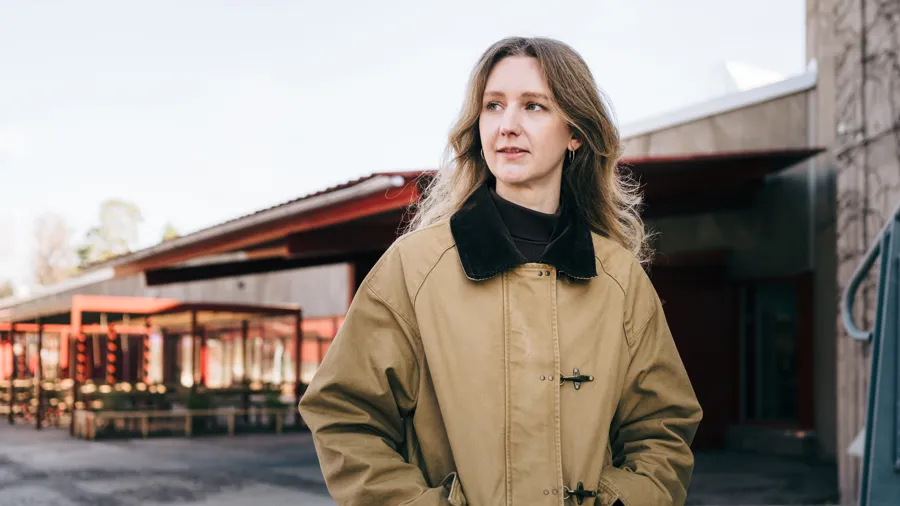
Jeanne Cilliers’ family came to South Africa in the 1600s. The Cilliers were Huguenots, Protestants fleeing an increasingly Catholic France. When asked whether her own background has influenced her research, she pauses briefly.
“As a researcher, you try to be objective, but personal connections are likely to matter. Sometimes it’s fun to be able to identify your own family in the material. There are also practical benefits, as I can use my family tree as an example when teaching,” she says smiling.
 Anna Nilsen


