
In criminal investigations, it can be crucial to know when a person last consumed alcohol in order to determine responsibility with certainty. However, according to Robert Kronstrand, chief toxicologist at the Swedish National Board of Forensic Medicine and adjunct professor at Linköping University, current techniques, where alcohol levels are measured in exhaled breath and blood samples, are too imprecise:
“One thing we do is assess when a person last drank alcohol, for example in a drink-driving case. The person has crashed, been unobserved for a period before the police arrive, and when tested is positive for alcohol. The person then says that all intake occurred after the journey, and that the blood test therefore doesn’t reflect the situation while they were driving,� he says.

Refuting hip flask defence
This argument is known as post-incident drinking, or hip flask defence, and can be difficult to disprove using current techniques. Another situation where alcohol consumption is an important piece of the puzzle in investigations is in various types of violent crime or accidents.
“Then we want to be able to extrapolate backwards from an analytical result that may have been obtained three, five or ten hours after the event, and estimate the alcohol level at the time of the offence and perhaps also when the person stopped drinking,� says Robert Kronstrand.
To achieve this, the research group at Linköping University, together with the Swedish National Board of Forensic Medicine, has developed a computational model for a so-called digital twin. Digital twin technology can, in simplified terms, be described as a virtual model of a person where individual differences such as sex, age, height, weight and medical conditions are taken into account when calculating alcohol levels in the body.
Analysis of metabolites
In the LiU researchers’ model, data from a person’s exhaled breath, blood and urine samples are analysed. These data consist of various metabolites from alcohol metabolism, found in blood and urine. All this information is then used together with the digital twin to generate individualised results on drinking patterns.
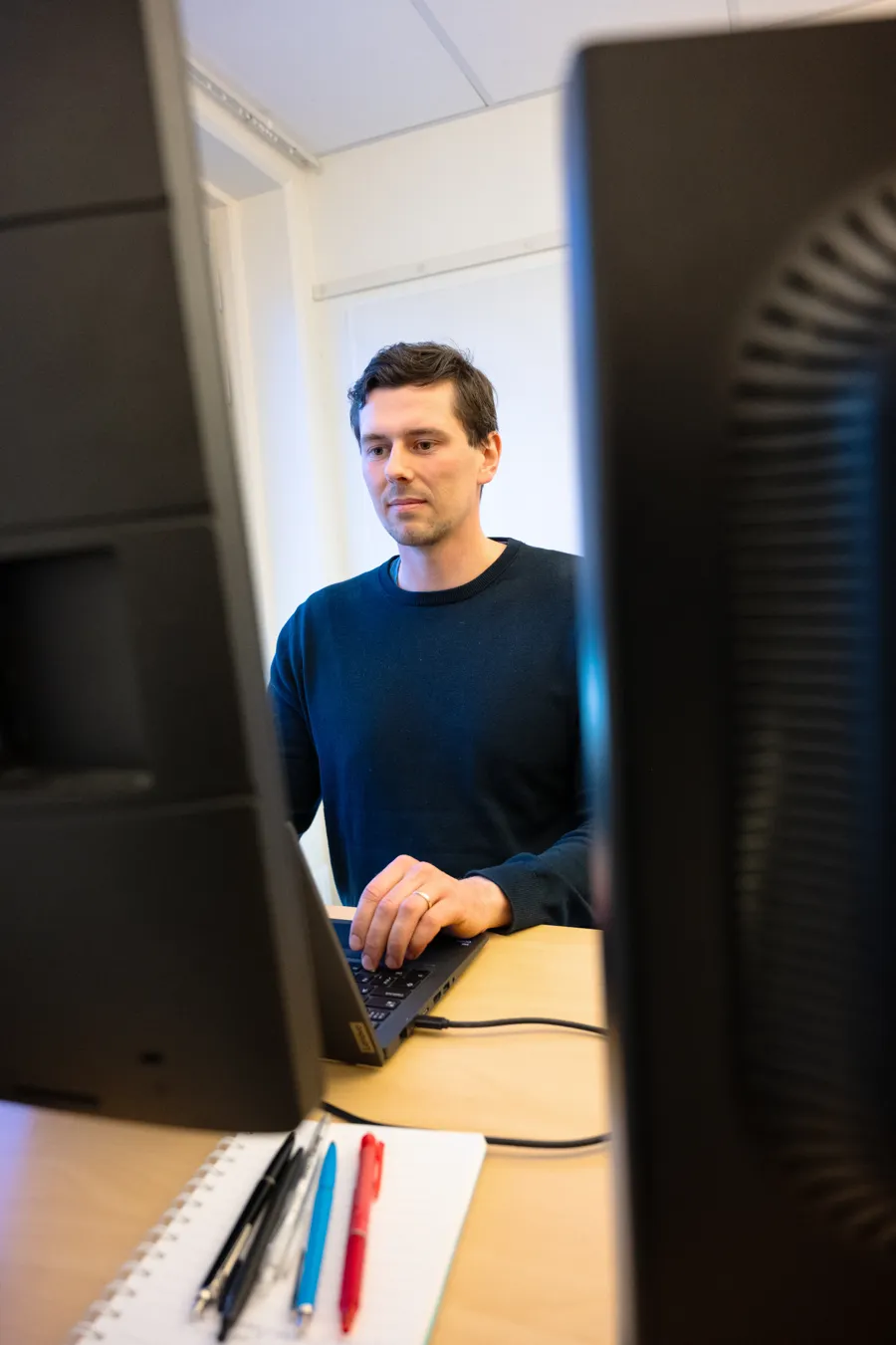
According to the researchers, the digital twin could also take into account gastric emptying rates and alcohol absorption, which depend on food intake or the type of alcoholic beverage consumed.
“We want to explore alcohol intake and how it breaks down in the body. This involves measurements of both alcohol directly in blood and urine, and secondary metabolites that arise during the breakdown of alcohol,� says Henrik Podéus Derelöv, doctoral student at the Department of Biomedical Engineering at Linköping University (LiU).
Flexible tool
The aim is to develop a user-friendly tool for forensic investigations where sample data are entered, and the model provides probable answers as to when a person last drank and how much. According to Henrik Podéus Derelöv, the results are intended as a support in assessments and do not replace the overall forensic medicine evaluation.
“The model will always involve inherent uncertainty, but that also applies to current methods, and the ambition is to create a more flexible tool.�
The study was primarily funded by the Swedish Research Council, Vinnova, Horizon Europe and through ALF funding from Region Östergötland. The calculations were carried out at the National Supercomputer Centre at LiU.
Article: , Henrik Podéus, Christian Simonsson, Gerd Jakobsson, Robert Kronstrand, Elin Nyman, William Lövfors, Gunnar Cedersund, Scientific Reports 16, Article number: 9336 (2026), published online 18 March 2026. DOI: 10.1038/s41598-026-44093-4


